
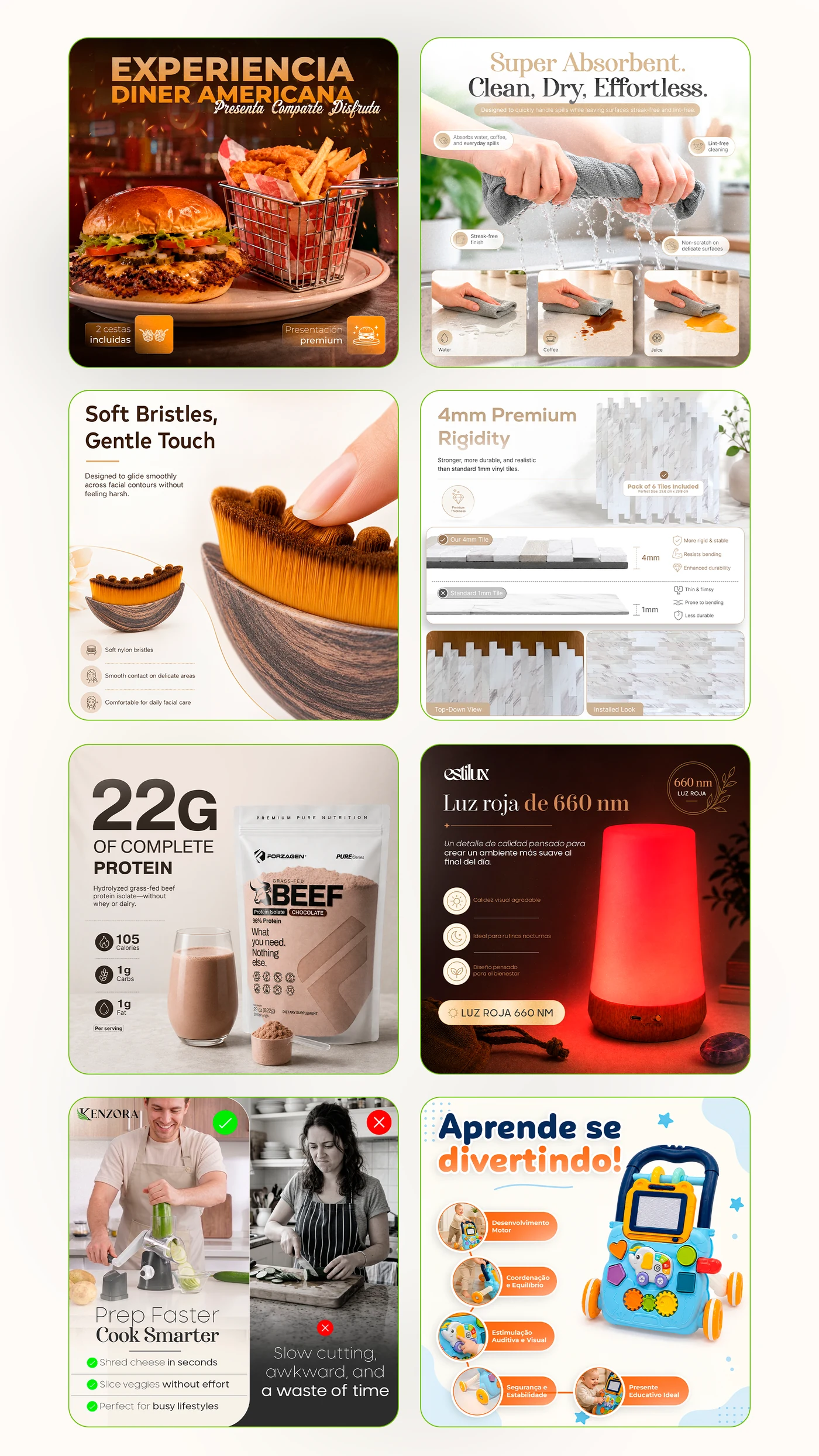
The True Impact of Product-Understanding Returns on Amazon
On Amazon, a customer return is far more damaging than a lost sale: it incurs non-refundable FBA fulfillment fees, return processing fees in designated categories, and risks algorithmic suppression if return rates exceed niche benchmarks. Worse, dissatisfied customers who feel misled are far more likely to leave a damaging 1-star or 2-star review.
Examining Seller Central Voice of the Customer and return reason reports reveals that a substantial share of returns do not stem from product manufacturing flaws, but from buyer misunderstanding: shoppers formed a mental expectation that did not match the physical reality of what arrived.
Four Common Detail Page Communication Gaps That Drive Returns
Most product-understanding returns originate from four identifiable detail page deficiencies:
- Ambiguous scale and dimensions: Isolated white-background photos offer zero sense of true scale, leading buyers to purchase items that end up too large, too small, or incompatible with their intended space.
- Unclear technical compatibility: Shoppers assume an accessory, part, or case fits their specific model year or version, only discovering the discrepancy after opening the packaging.
- Confusion regarding package contents: Lifestyle or context photos showing complementary staging items lead buyers to believe those accessories were included, generating «missing parts» claims.
- Setup or assembly intimidation: Products requiring basic assembly or technical sequence where the lack of quick visual guidance leads shoppers to conclude the item is defective.
What the Secondary Carousel Must Resolve in the First 7 Slots
The top image gallery is where mobile shoppers make fast purchasing commitments. Rather than filling slots with repetitive cosmetic angles, structure the sequence to preempt friction:
- Slot 01 (Main Hero): Completely faithful representation of the exact product without unincluded accessories.
- Slot 02 (Core Hook): Primary problem solved and target use case.
- Slot 03 (Dimensions & Scale): Precise metric and imperial callouts alongside recognizable everyday reference objects (hands, smartphones, standard desks).
- Slot 04 (Lifestyle in Context): Authentic usage demonstrating ergonomic scale and realistic operation.
- Slot 05 (Package Breakdown): High-clarity «What's in the Box» layout detailing every included accessory while clearly tagging items sold separately.
- Slot 06 (Compatibility Matrix): Clean chart featuring unambiguous green checks for supported hardware and red indicators for incompatible alternatives.
- Slot 07 (Confidence & Setup): Clear warranty details and basic setup orientation.
Explore our strategic methodology on Amazon listing image design to see how we engineer high-clarity galleries.
What A+ Content Modules Should Deepen Below the Fold
While the top gallery caters to swift evaluation, A+ Content design services serve the thorough, analytical shopper. This lower real estate is where your brand can deliver:
- Detailed engineering schematics with clearance requirements and tolerance thresholds.
- Step-by-step visual onboarding guides (1-2-3 sequence) for initial setup.
- Internal catalog comparison tables that steer shoppers toward the precise variant matching their exact needs.
- Visual FAQ modules that directly answer objections mined from competitor review sections.
Review our Amazon A+ Content case study to examine how modular storytelling establishes technical credibility.
Comparative Matrix: Buyer Misunderstanding vs. Visual Asset Solution
| Return Root Cause | Common Listing Weakness | Carousel Asset Solution | A+ Content Module Solution |
|---|---|---|---|
| «Smaller/larger than expected» | Isolated studio photos without human or room scale references. | Scale infographic with labeled dimension callouts and human hand reference. | Full-width schematic breakdown with interior clearances and capacity specs. |
| «Incompatible with my system» | Lengthy text model lists hidden in text bullet points. | High-contrast visual compatibility matrix with green checks and red exclusions. | Comprehensive multi-generation compatibility chart with serial number guide. |
| «Missing parts upon delivery» | Lifestyle staging showing decorative tools not in box. | Flat-lay «What is Included» image with numbered inventory list. | Unboxing module breaking down primary device vs. supplied accessories. |
| «Doesn't work / Difficult setup» | Dense monochrome instruction sheet buried in the box. | 3-step quick start graphic highlighting essential first-use sequence. | Sequential troubleshooting and setup guide addressing common beginner errors. |
Practical Applications Across Complex Categories: Tech, Home & Hardware
When designing images for complex products such as power banks, chargers, or docks, identifying connector standards (USB-C PD, wattage tolerances, data protocols) visually is essential to prevent erroneous purchases.
For modular home storage, providing interior drawer clearance rather than just exterior housing dimensions prevents frustrating returns when bins do not fit expected pantry items.
For replacement parts and automotive accessories, featuring high-contrast macro views of mounting brackets or connection pins helps buyers verify physical compatibility before ordering.
Pre-Flight Listing Checklist and How to Audit Visual Clarity
Before scaling marketing spend, run your product listing through this operational checklist:
- Does every visual asset in your main gallery show only what actually arrives in the box?
- Is there at least one image providing human-scale visual context without requiring pinch-to-zoom?
- Are known incompatible models or exceptions explicitly highlighted?
- Can a smartphone shopper comprehend basic assembly requirements within 5 seconds?
Clearer visual design does not promise artificial percentage reductions in returns, but it builds the foundation for confident, accurate buyer decisions. To evaluate your catalog, request an Amazon listing audit or compare packages on our Amazon design pricing page.